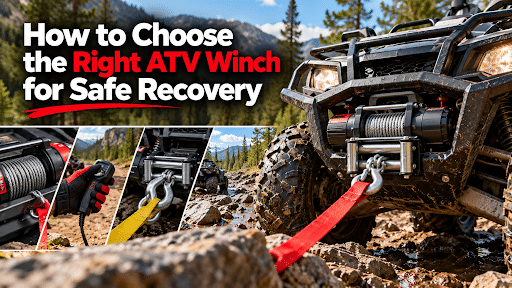
An ATV winch can help riders recover a vehicle that becomes stuck in mud, sand, or difficult terrain. Choosing the right winch depends on the ATV’s weight, intended use, mounting setup, and recovery conditions. Reviewing the vehicle’s ATV diagrams can also help identify relevant components when planning a compatible setup.
How to Choose the Right Winch Capacity
Winch capacity is one of the most important factors to consider. A winch must provide enough pulling force for the ATV and the situations in which it will be used. A vehicle stuck in deep mud or facing a steep incline may require considerably more pulling force than one moving across firm ground.
When comparing equipment, account for the ATV’s operating weight, added accessories, cargo, and typical terrain. Checking compatibility with available parts department options can help when identifying suitable mounting hardware and related components.
Check Mounting and Electrical Compatibility
Before purchasing a winch, confirm that its mounting plate or bracket is compatible with the ATV’s frame. Some models require a vehicle-specific mounting kit, while others may need additional hardware. Never assume that a winch will fit simply because its rated capacity appears suitable.
Electrical compatibility matters as well. Check the winch’s voltage requirements, wiring arrangement, battery condition, and solenoid placement. Wires should be routed away from hot surfaces, sharp edges, and moving suspension components.
A correctly fitted winch should be securely mounted and positioned so that its cable or rope feeds evenly onto the drum.
Synthetic Rope vs. Steel Cable
ATV winches commonly use either synthetic rope or steel cable. Each option has advantages, and the best choice depends on the riding environment, maintenance preferences, and manufacturer’s recommendations.
Synthetic rope is generally lighter and easier to handle. However, it can be vulnerable to abrasion, cuts, and damage from excessive heat. It requires regular inspection and appropriate protection against rough surfaces.
Steel cable is durable and can tolerate certain abrasive conditions, but it is heavier and may develop broken wire strands, kinks, or corrosion. Gloves are important when handling steel cable because damaged strands can cause injuries.
Regardless of the material, inspect the line before use and replace it if it shows damage beyond the manufacturer’s acceptable limits.
Safe Winch Use and Recovery Techniques
Safe recovery begins with assessing the terrain and choosing a suitable, stable anchor point. Use recovery equipment rated for the load and follow the winch manufacturer’s instructions. Never exceed the rated capacity or use improvised attachment points that could fail under tension.
Keep bystanders away from the recovery area and never step over a loaded cable or rope. Avoid standing directly in line with a tensioned cable, and use a suitable winch line damper when recommended. Operate the winch smoothly instead of repeatedly applying sudden force.
If the installation, wiring, or mounting arrangement is uncertain, have a qualified service technician inspect the setup before attempting a recovery. Professional assessment is particularly important when structural mounting points or electrical connections may be unsuitable.
Maintain the Winch for Long-Term Reliability
Regular maintenance helps keep a winch ready for unexpected situations. After use, inspect the rope or cable for fraying, broken strands, cuts, corrosion, and uneven winding. Clean away mud and debris according to the manufacturer’s instructions.
Check the hook, mounting bolts, fairlead, wiring, and electrical connections for signs of damage or looseness. Keep the rope or cable properly wound onto the drum, avoiding crossed layers that could cause uneven loading during the next recovery.
Test the winch periodically according to the owner’s manual, even if it has not been used recently. Store accessories in a clean, dry location and replace damaged equipment before relying on it in the field.
Frequently Asked Questions
1. What size winch do I need for an ATV?
Choose a winch with sufficient rated pulling capacity for the ATV’s weight and expected recovery conditions. Follow the vehicle and winch manufacturers’ recommendations.
2. Is synthetic rope better than steel cable?
Neither option is best for every situation. Synthetic rope is lighter, while steel cable offers different durability characteristics. Maintenance and operating conditions should guide the decision.
3. Can I install a winch on any ATV?
Not necessarily. The ATV must have a compatible mounting arrangement, suitable electrical capacity, and appropriate installation hardware.
4. How often should an ATV winch be inspected?
Inspect it before use and after demanding recoveries. Follow the manufacturer’s maintenance schedule and examine the cable, hook, wiring, and mounting hardware.
5. Can an ATV winch recover a much heavier vehicle?
A winch should never be used beyond its rated capacity or outside its intended operating conditions. Recovering a heavier vehicle may require different equipment and a carefully assessed recovery plan.
Conclusion
Choosing the right ATV winch involves matching its capacity to the vehicle, checking mounting and electrical compatibility, selecting an appropriate cable type, and following safe recovery practices. Regular inspections and maintenance help identify damage before the equipment is needed in difficult conditions. If a worn component needs replacement, a parts request can help identify suitable replacement parts for the specific vehicle.
Read More: How to Find a Reliable Powersports Dealer for Motorcycles, ATVs, and UTVs